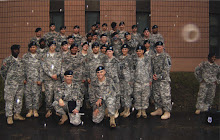
When U. S. Army Chaplain David Waweru and his wife, Chaplain Christine Waweru, learned that they both had orders to detach from duty at Fort Hood in Kileen, Texas and report for chaplain service in Katterbach, Germany, they immediately began trying without success to find the town on a map of Germany.
They asked Army friends at Fort Hood, many of whom had been stationed in Germany, but no one knew Katterbach. Christine and David then began to really wonder about this mysterious garrison that no one seemed to have heard about.
Alas they bumped into a Lieutenant Colonel and his wife who had just returned to Texas from duty at Katterbach. This fine officer and his spouse excitingly assured the Wawerus that they were in for a wonderful place to live and serve. The LTC's spouse followed up with phone calls to Christine in which she provided helpful contacts in and around Katterbach and other information about their soon-to-be "home town" for three years.
Katterbach is located in Bavaria. The nearest somewhat-large city is Nurmberg -- site of the post WWII Holacaust trials. Katterbach is a small town very near the old and interesting small city of Ansbach. I drove the five-hour trip from Ramstein/Landstuhl on Saturday, May 5 to visit with the Wawerus at chapel on Sunday and to make chaplain rounds with them on Monday.
My compact visit included participating with the Wawerus in the Katterbach Chapel Liturgical (Episcopal Rite) Holy Eucharist where David and Christine are co-pastors. Their two fun-loving, spiritually-maturing sons, Baraka (17) and Imani (13), also serve faithfully in the chapel life. Baraka takes his turn as an usher and as a scripture reader; Imani plays percussion (gently, rhythemically playing the drums) and he substitutes as pianist when the regular keyboard person is away.
The Sunday afternoon Episcopal chapel-community lunch at the home of newly commissioned lay Worship Leader, Lieutenant Colonel Rick Crogan, and his wife Jackie; my Monday separate chaplain rounds with Christine then with David; and the Monday evening dinner-out with the Waweru family -- all allowed me see something of how this dedicated, faithful, happy family is making a positive difference in this relatively small military garrison community.
The Waweru chaplains along with their gifted, smart and athletic sons, have indeed found Katterbach, and as a result, Katterbach is a good deal better place to live and serve. They are gently, good-naturally and faithfully serviving God, the Episcopal Church and the U.S. peace makers/keepers and their families stationed here. Thanks be to God.
Monday, May 7, 2007


Saturday, April 28, 2007
Serving out on the edge
Chaplains have a sense of adventure and an ability to serve "out on the edge." In fact a willingness to serve outside the relative stability of a local congregation is a basic requirement to be able to serve faithfully and effectively over the long haul as a chaplain.
All chaplains are expected and strongly encouraged to retain their connectedness to their home diocese and also with a local church and the local diocese where they are geographically assigned.
Before any chaplain is endorsed by Bishop George Packard, our Church's Bishop Suffragan for Chaplaincy, he/she is required to have had at least two years of service in parish-centered ministry. But a capacity to serve "outside the camp" of the local, settled-nature of congregational life is a must for any institutional chaplain whether it be in the military, in a hospital, in a prison, etc. (See my first column in this series.)
Chaplain Gerry Bebber and his wife Ilene are folk who don't blink when asked to serve in out of the ordinary places. Last year they were asked by the US Army Chaplain Corps assignment officer to once again to move to Alaska to serve -- this time at Fort Richardson, near Anchorage. Some years ago they served at a post near Fairbanks and fell in love with the "last frontier" state of Alaska. Recently they even purchased a small, rustic cabin three hours north of Anchorage in a pristine, scenic, sparsely populated area but near a main road. This is their spiritual and physical retreat cabin for now and maybe for their retirement years too.
Alaska is by far geographically the largest of any of the 50 U.S. states but with less than 700,000 inhabitants, it has in many ways remained a frontier wilderness of great beauty and quietness. Moose and other wildlife freely roam even near the few cities and towns.
I had an opportunity to visit Gerry and Ilene Bebber last month in their snow covered neighborhood and inside their very hospitable home. I made Sunday rounds with Gerry for chapel services and then on two weekdays which included witnessing him effectively lead the Monday morning chaplain staff meeting. His intentional warm, few-words-n0-nonsense yet laid back approach make him easy to relate with by those he serves in the post chapel communities, and during his garrison encounters with officers and enslisted personnel.
As a senior Lieutenant Colonel, one of Gerry's responsibilities is to supervise and mentor three junior chaplains and two enlisted chaplain assistants. He does it with steady grace and calmness. It is effident by the way the chapel team relates to him that he has earned their deep respect and trust.
Although he maintains contact, Gerry is far away from his home Diocese of Quincy, Illinois. But as an Army active duty (i.e. full time) chaplain he and Irene have almost always been geographically distanced from mid-America. Gerry's tours have not only included duties in the eastern, southern and Pacific northwest states, he also has spent time in the deserts of Kuwait and Iraq.
A willingness to live and serve "out on the edge" is one of the qualifications for serving in just about any chaplaincy context, but especially for the military chaplain. Gerry Bebber and his supportive and equally flexible dear wife Irene serve God and their Episcopal Church faithfully and well.
All chaplains are expected and strongly encouraged to retain their connectedness to their home diocese and also with a local church and the local diocese where they are geographically assigned.
Before any chaplain is endorsed by Bishop George Packard, our Church's Bishop Suffragan for Chaplaincy, he/she is required to have had at least two years of service in parish-centered ministry. But a capacity to serve "outside the camp" of the local, settled-nature of congregational life is a must for any institutional chaplain whether it be in the military, in a hospital, in a prison, etc. (See my first column in this series.)
Chaplain Gerry Bebber and his wife Ilene are folk who don't blink when asked to serve in out of the ordinary places. Last year they were asked by the US Army Chaplain Corps assignment officer to once again to move to Alaska to serve -- this time at Fort Richardson, near Anchorage. Some years ago they served at a post near Fairbanks and fell in love with the "last frontier" state of Alaska. Recently they even purchased a small, rustic cabin three hours north of Anchorage in a pristine, scenic, sparsely populated area but near a main road. This is their spiritual and physical retreat cabin for now and maybe for their retirement years too.
Alaska is by far geographically the largest of any of the 50 U.S. states but with less than 700,000 inhabitants, it has in many ways remained a frontier wilderness of great beauty and quietness. Moose and other wildlife freely roam even near the few cities and towns.
I had an opportunity to visit Gerry and Ilene Bebber last month in their snow covered neighborhood and inside their very hospitable home. I made Sunday rounds with Gerry for chapel services and then on two weekdays which included witnessing him effectively lead the Monday morning chaplain staff meeting. His intentional warm, few-words-n0-nonsense yet laid back approach make him easy to relate with by those he serves in the post chapel communities, and during his garrison encounters with officers and enslisted personnel.
As a senior Lieutenant Colonel, one of Gerry's responsibilities is to supervise and mentor three junior chaplains and two enlisted chaplain assistants. He does it with steady grace and calmness. It is effident by the way the chapel team relates to him that he has earned their deep respect and trust.
Although he maintains contact, Gerry is far away from his home Diocese of Quincy, Illinois. But as an Army active duty (i.e. full time) chaplain he and Irene have almost always been geographically distanced from mid-America. Gerry's tours have not only included duties in the eastern, southern and Pacific northwest states, he also has spent time in the deserts of Kuwait and Iraq.
A willingness to live and serve "out on the edge" is one of the qualifications for serving in just about any chaplaincy context, but especially for the military chaplain. Gerry Bebber and his supportive and equally flexible dear wife Irene serve God and their Episcopal Church faithfully and well.
Monday, April 23, 2007
Like ministering to a parade as it passes by...
Referring to the highly mobile/transitory nature of life in the military and in VA hospitals, I once heard someone remark that "chaplain service is sort of like trying to minister to people in a parade as they pass by."
I recalled that word-picture as I continued my reflection upon some of our Episcopal Church chaplains whom I visited recently in the Pacific Northwest. In my previous blog/column I referred to chaplains as persons serving "outside the camp" --i.e. outside the more traditional locales of priestly ministry in a settled (at least somewhat) church, at a specific address, in a town or city.
Active duty Chaplain (Major) Beth Echols is a petite, smart, low-key, strong, look-you-in-the-eye, non-pretentious, caring priest, wife and mother of two. She is completing a Clinical Pastoral Education residency program at the large, sparkling Madigan Army Medical Center at Fort Lewis near Tacoma, Washington -- the hospital where she will serve for two to three follow-on years once her one-year CPE residency is soon completed.
Chaplain Echols (who is a priest with canonical ties to the "East Coast Washington" --as in DC/Southern Maryland) along with her supportive husband and two sharp kids, have fallen in love with the Tacoma/Olympia area so they are pleased with the prospects of staying longer.
Beth took me on a tour of the medical center which inadvertently allowed me to witness first hand, even on that relatively brief one-day visit, something of the impact a caring chaplain has on people's lives. At every turn we bumped into patients and staff (as well as fellow chaplains) who quickly recognized and greeted her. The manner and tone in which they addressed Beth indicated their appreciation and respect for her ministry.
For example, as we were leaving the hospital dining room following breakfast someone called out "Chaplain Echols, ma'am" and we both turned to see a tall, young soldier catching up with us. He said to Beth, "Chaplain I just want to thank you for coming to the critical care unit that evening to be with my wife and me and to baptize our baby." Chaplain Echols gave him a brief neck-hug and gently replied, "Thanks. I am glad I came too. " Nothing more was said. The young soldier turned and headed back to the dinning facility and we continued walking to the elevator.
Beth told me that the soldier's child had been in the intensive care unit possibly near death. The soldier and his wife asked the duty Protestant chaplain that night to please baptize their infant. That chaplain told the couple because of his faith-group's stance on baptism he couldn't baptize an infant but that he would phone the Episcopal chaplain and let them speak with her. They did and Beth drove back to the hospital (about a 20-mile trip one-way), spent time with the young, anxious couple and baptized their infant.
The transitory life of moving once every two to three years to a different military installation in the U.S. or overseas -- not to mention the family separation when the service member is deployed -- results in military individuals, couples, and their children, living far from the familiar support of family, hometown, and their minister, priest, rabbi or imam. A good chaplain, such as Beth, learns to step non-judgmentally into those precious moments along the "parade route," into the joys and pains and sometimes death, to serve as God's Presence -- God's hand, ear, heart and mind. Those chaplains are worth their weight in gold to the women, and men in uniform and to their families who travel in that parade "outside the camp".
I recalled that word-picture as I continued my reflection upon some of our Episcopal Church chaplains whom I visited recently in the Pacific Northwest. In my previous blog/column I referred to chaplains as persons serving "outside the camp" --i.e. outside the more traditional locales of priestly ministry in a settled (at least somewhat) church, at a specific address, in a town or city.
Active duty Chaplain (Major) Beth Echols is a petite, smart, low-key, strong, look-you-in-the-eye, non-pretentious, caring priest, wife and mother of two. She is completing a Clinical Pastoral Education residency program at the large, sparkling Madigan Army Medical Center at Fort Lewis near Tacoma, Washington -- the hospital where she will serve for two to three follow-on years once her one-year CPE residency is soon completed.
Chaplain Echols (who is a priest with canonical ties to the "East Coast Washington" --as in DC/Southern Maryland) along with her supportive husband and two sharp kids, have fallen in love with the Tacoma/Olympia area so they are pleased with the prospects of staying longer.
Beth took me on a tour of the medical center which inadvertently allowed me to witness first hand, even on that relatively brief one-day visit, something of the impact a caring chaplain has on people's lives. At every turn we bumped into patients and staff (as well as fellow chaplains) who quickly recognized and greeted her. The manner and tone in which they addressed Beth indicated their appreciation and respect for her ministry.
For example, as we were leaving the hospital dining room following breakfast someone called out "Chaplain Echols, ma'am" and we both turned to see a tall, young soldier catching up with us. He said to Beth, "Chaplain I just want to thank you for coming to the critical care unit that evening to be with my wife and me and to baptize our baby." Chaplain Echols gave him a brief neck-hug and gently replied, "Thanks. I am glad I came too. " Nothing more was said. The young soldier turned and headed back to the dinning facility and we continued walking to the elevator.
Beth told me that the soldier's child had been in the intensive care unit possibly near death. The soldier and his wife asked the duty Protestant chaplain that night to please baptize their infant. That chaplain told the couple because of his faith-group's stance on baptism he couldn't baptize an infant but that he would phone the Episcopal chaplain and let them speak with her. They did and Beth drove back to the hospital (about a 20-mile trip one-way), spent time with the young, anxious couple and baptized their infant.
The transitory life of moving once every two to three years to a different military installation in the U.S. or overseas -- not to mention the family separation when the service member is deployed -- results in military individuals, couples, and their children, living far from the familiar support of family, hometown, and their minister, priest, rabbi or imam. A good chaplain, such as Beth, learns to step non-judgmentally into those precious moments along the "parade route," into the joys and pains and sometimes death, to serve as God's Presence -- God's hand, ear, heart and mind. Those chaplains are worth their weight in gold to the women, and men in uniform and to their families who travel in that parade "outside the camp".
Thursday, April 5, 2007
Serving outside the gate, even sometimes on a garbage heap
When someone asks me : "What do chaplains do?" I respond: "They serve outside the gate."
After the questioner blinks his/her eyes a time or two as they wait to see where in the world I am going with that kind of answer, I proceed to say something like this:
"When U.S. military Reserve, National Guard and Active Duty chaplains-- as well as Federal Prison and Veterans Affairs hospital chaplains (or any other chaplains) --put on their respective uniforms with the cross insignia, they are following Jesus' example of being willing to go "outside the city gate" (Hebrews 13: 12).
The "outside the gate" in Hebrews is a clear reference to Golgotha Hill outside the gate and walls of Jerusalem. Golgotha in Jesus' day was known as the "place of the scull" (place of death) and the city's "garbage heap." It became one of the places where criminals were taken by the governing authorities to be placed on a cross and "hung-out" to die as a cruel and vivid warning to the rest of the population to "stay in line or else..."
Somewhat like within the walls of Jerusalem in Jesus' time, the local church today is a vital place of witness, worship, spiritual nourishment and service for Christians . The local congregation's role is invaluable. Yet the many places outside the gate today-- including the hospital ward, the prison block, the military installation, and even a war zone -- are important places of witness and service, and yes, places to promote peace and reconciliation.
In fact we all -- lay persons and ordained -- are challenged by the New Testament writer in the following verse with this: "Let us then go to him outside the camp and bear the abuse he endured" (Hebrews 13: 13). That's a pretty heavy demand!
Yet it gives a clear word-picture of where chaplains and committed lay persons serve -- outside the gate, outside the confines of the camp -- i.e. outside the local church congregation in a less clearly defined terrain.
In fact some folk ask, "What business does a chaplain or any other committed religious person have in such a messy, federal-government-policy-driven, politicized environment?" Perhaps that's a question for a later blog. For now I simply say: Yes chaplaincy takes place in a rather messy environment -- i.e. a risk-filled, line-blurred, grayish place to serve. But aren't we all called at the dismissal of each Holy Eucharist to "go in peace to love and serve the Lord" and doesn't that include any place where God's children are located -- a prison, a hospital, a military unit, etc.?
One of the responsibilities (and joys!) my "boss," Bishop George Packard, and I have is to provide pastoral support for our Church's federal chaplains and other chaplains who are serving "outside the gate."
Most recently I was privileged to visit some of our chaplains in the Pacific Northwest. My first stop was Portland, Oregon where I represented Bishop Packard at our Episcopal Church's Executive Council meeting. (The 38 lay and ordained members of Exec Council meet three times each year to carry out the programs and policies adopted by our Church's General Convention and oversee the ministry and mission of the Church.) In Portland I made our chaplaincy report to the Exec Council's National Concerns Committee which is most-ably chaired by Mr. John Vanderstar an outstanding lay person, retired lawyer, and one who has a supportive interest in the challenges of chaplaincy ministry.
While in Portland I had a delightful lunch-visit with U.S. Air Force Auxiliary --Civil Air Patrol (CAP) Chaplain Annette Arnold-Boyd, an energetic priest who has, among other things, worked with her young CAP cadets, her network of church friends and others to pack and mail many "care packages" to some Oregon military personnel in Iraq. Some of the items have included things military members have requested to distribute to needy Iraqi families, individuals and children.
Also in Portland I had breakfast with Chaplain Dale Carr, a friend who is a priest in the Diocese of Oregon and who serves as a chaplain for a privately owned chain of hospitals. During our conversation it was clear that Dale loves doing ministry in the non-church-connected Portland hospital where he daily represents the presence of our Lord and thus cares for all -- patients and staff, religious and non-religious -- who invite him into their daily lives as he faithfully makes his rounds,"showing up" where pain and death are located.
From Portland I went to Fairchild Air Force Base near Spokane, Washington and visited Chaplain Jeff Neuberger and his wife Kate. Jeff rather recently completed a tour in Iraq at a U.S. Air Force field hospital near Baghdad. He shared with me via conversation and photos the challenging and dangerous environment in which his "outside the gate" ministry took place -- a locale which was frequently a target of mortar rounds being fired at, of all places, a hospital compound.
At Spokane's Fairchild Air Force Base, where Jeff is the Wing (i.e. senior) Chaplain, he ably supervises four younger chaplains-- some of which could possibly be eventually assigned to serve in Afghanistan, Iraq or Kuwait -- all locales that are clearly"outside the camp" of safety. In both indirect and direct ways Jeff is helping prepare those chaplains for their ongoing service outside the more traditional role of civilian priest or minister.
In my next blog I will share two other visits with Episcopal Church chaplains in the Pacific Northwest -- one in an Army hospital in Tacoma, Washington, and the other at Fort Richardson, Alaska.
Meanwhile, as we ponder the two solemn parts of this Eater Triduum -- Maundy Thursday and Good Friday -- en route to the third part, Easter Day, let us renew our commitment to the One who, in his witness as God incarnate (in flesh), showed the deep love of God for each of us by willingly going outside the gate to Golgotha rather than deny the truth of who He was called to be.
After the questioner blinks his/her eyes a time or two as they wait to see where in the world I am going with that kind of answer, I proceed to say something like this:
"When U.S. military Reserve, National Guard and Active Duty chaplains-- as well as Federal Prison and Veterans Affairs hospital chaplains (or any other chaplains) --put on their respective uniforms with the cross insignia, they are following Jesus' example of being willing to go "outside the city gate" (Hebrews 13: 12).
The "outside the gate" in Hebrews is a clear reference to Golgotha Hill outside the gate and walls of Jerusalem. Golgotha in Jesus' day was known as the "place of the scull" (place of death) and the city's "garbage heap." It became one of the places where criminals were taken by the governing authorities to be placed on a cross and "hung-out" to die as a cruel and vivid warning to the rest of the population to "stay in line or else..."
Somewhat like within the walls of Jerusalem in Jesus' time, the local church today is a vital place of witness, worship, spiritual nourishment and service for Christians . The local congregation's role is invaluable. Yet the many places outside the gate today-- including the hospital ward, the prison block, the military installation, and even a war zone -- are important places of witness and service, and yes, places to promote peace and reconciliation.
In fact we all -- lay persons and ordained -- are challenged by the New Testament writer in the following verse with this: "Let us then go to him outside the camp and bear the abuse he endured" (Hebrews 13: 13). That's a pretty heavy demand!
Yet it gives a clear word-picture of where chaplains and committed lay persons serve -- outside the gate, outside the confines of the camp -- i.e. outside the local church congregation in a less clearly defined terrain.
In fact some folk ask, "What business does a chaplain or any other committed religious person have in such a messy, federal-government-policy-driven, politicized environment?" Perhaps that's a question for a later blog. For now I simply say: Yes chaplaincy takes place in a rather messy environment -- i.e. a risk-filled, line-blurred, grayish place to serve. But aren't we all called at the dismissal of each Holy Eucharist to "go in peace to love and serve the Lord" and doesn't that include any place where God's children are located -- a prison, a hospital, a military unit, etc.?
One of the responsibilities (and joys!) my "boss," Bishop George Packard, and I have is to provide pastoral support for our Church's federal chaplains and other chaplains who are serving "outside the gate."
Most recently I was privileged to visit some of our chaplains in the Pacific Northwest. My first stop was Portland, Oregon where I represented Bishop Packard at our Episcopal Church's Executive Council meeting. (The 38 lay and ordained members of Exec Council meet three times each year to carry out the programs and policies adopted by our Church's General Convention and oversee the ministry and mission of the Church.) In Portland I made our chaplaincy report to the Exec Council's National Concerns Committee which is most-ably chaired by Mr. John Vanderstar an outstanding lay person, retired lawyer, and one who has a supportive interest in the challenges of chaplaincy ministry.
While in Portland I had a delightful lunch-visit with U.S. Air Force Auxiliary --Civil Air Patrol (CAP) Chaplain Annette Arnold-Boyd, an energetic priest who has, among other things, worked with her young CAP cadets, her network of church friends and others to pack and mail many "care packages" to some Oregon military personnel in Iraq. Some of the items have included things military members have requested to distribute to needy Iraqi families, individuals and children.
Also in Portland I had breakfast with Chaplain Dale Carr, a friend who is a priest in the Diocese of Oregon and who serves as a chaplain for a privately owned chain of hospitals. During our conversation it was clear that Dale loves doing ministry in the non-church-connected Portland hospital where he daily represents the presence of our Lord and thus cares for all -- patients and staff, religious and non-religious -- who invite him into their daily lives as he faithfully makes his rounds,"showing up" where pain and death are located.
From Portland I went to Fairchild Air Force Base near Spokane, Washington and visited Chaplain Jeff Neuberger and his wife Kate. Jeff rather recently completed a tour in Iraq at a U.S. Air Force field hospital near Baghdad. He shared with me via conversation and photos the challenging and dangerous environment in which his "outside the gate" ministry took place -- a locale which was frequently a target of mortar rounds being fired at, of all places, a hospital compound.
At Spokane's Fairchild Air Force Base, where Jeff is the Wing (i.e. senior) Chaplain, he ably supervises four younger chaplains-- some of which could possibly be eventually assigned to serve in Afghanistan, Iraq or Kuwait -- all locales that are clearly"outside the camp" of safety. In both indirect and direct ways Jeff is helping prepare those chaplains for their ongoing service outside the more traditional role of civilian priest or minister.
In my next blog I will share two other visits with Episcopal Church chaplains in the Pacific Northwest -- one in an Army hospital in Tacoma, Washington, and the other at Fort Richardson, Alaska.
Meanwhile, as we ponder the two solemn parts of this Eater Triduum -- Maundy Thursday and Good Friday -- en route to the third part, Easter Day, let us renew our commitment to the One who, in his witness as God incarnate (in flesh), showed the deep love of God for each of us by willingly going outside the gate to Golgotha rather than deny the truth of who He was called to be.
Friday, March 30, 2007
Am I a fool -- or what?
I looked rather strange with ashes on my forehead several Wednesdays ago.
Yet that's how many people look each year at the outset of the 40-day Christian season called Lent We look quite foolish with a black, ashen cross on our faces reminding us of our mortality. To most post-moderns that probably seems utter folly to underscore our death, our ultimate return to dust. After all, we live in an exercise-until-you-drop skinny-glorifying-Western-culture and -- strangely enough --concurrently with an eat-all-you-want-because-you-can Mickey D way of life -- both seeming to exist as two different approaches to "death denying and death defying" feats.
So here I am on this Friday before Holy Week, the final stretch in this Lenten journey of reflection, self-exam and repentance. It lasts from Ash Wednesday to the Saturday before Easter Day-- a significant period to take a long look at who I am, why I am, and where my life is going.
Among other Lenten reflective disciplines, we are encourage to do some spiritual reading. I chose to read two books, one by Thomas Merton and one by Kenneth Leech -- "We Preach Christ Crucified" (Cowley Publications, 1994) -- a re-read for me of a personally very helpful book. (I read it 12 years ago during a hinge-period in my faith-journey and while serving as a chaplain on a six-month deployment aboard a US Navy ship in the Mediterranean and Agean Seas.)
Leech has served for many years as an Anglican priest at St. Botolph's, a church located on the edge of a tough, inner-city London neighborhood. His little 101-page book deals with, among other things, the contradictory folly of looking to the crushed and broken, ancient Jesus for our hope "in a world that continues to crush and break the children of God" (p. 6). All this seems like an utter inconsistent folly -- that God would use such a life-story, yes, such a non-power-hungry person, to show us how human life can and should be lived if it is to have real meaning.
From a worldly value system it is sheer idiocy to focus one's energies with a Leader-Lord who identifies with outcasts, makes extreme demands on his followers, and clearly makes a "polemic against the rich and the devout, all culminating in his death as a rebel and criminal" (Leech, p. 8).
So in Lent we are invited to head straight toward Easter -- and beyond --with this Christ who is a "fool", a symbol of contradiction, yes, a "mirror" of the seemingly strange, contradictory foolishness of God. And those who follow his way are called to an ongoing conversion to become shareholders in the folly.
At the end of the day, we are invited to become, in the words of Paul, "fools for Christ sake" (1 Corinthians 4:10). Yet strangely enough the result of becoming that kind of fool is a deep, abiding Easter-life that has been the fountainhead of joy discovered by many persons (diverse saints) down through the ages.
Lord, I want to re-discover that "folly", that deep joy. Count me in!
Yet that's how many people look each year at the outset of the 40-day Christian season called Lent We look quite foolish with a black, ashen cross on our faces reminding us of our mortality. To most post-moderns that probably seems utter folly to underscore our death, our ultimate return to dust. After all, we live in an exercise-until-you-drop skinny-glorifying-Western-culture and -- strangely enough --concurrently with an eat-all-you-want-because-you-can Mickey D way of life -- both seeming to exist as two different approaches to "death denying and death defying" feats.
So here I am on this Friday before Holy Week, the final stretch in this Lenten journey of reflection, self-exam and repentance. It lasts from Ash Wednesday to the Saturday before Easter Day-- a significant period to take a long look at who I am, why I am, and where my life is going.
Among other Lenten reflective disciplines, we are encourage to do some spiritual reading. I chose to read two books, one by Thomas Merton and one by Kenneth Leech -- "We Preach Christ Crucified" (Cowley Publications, 1994) -- a re-read for me of a personally very helpful book. (I read it 12 years ago during a hinge-period in my faith-journey and while serving as a chaplain on a six-month deployment aboard a US Navy ship in the Mediterranean and Agean Seas.)
Leech has served for many years as an Anglican priest at St. Botolph's, a church located on the edge of a tough, inner-city London neighborhood. His little 101-page book deals with, among other things, the contradictory folly of looking to the crushed and broken, ancient Jesus for our hope "in a world that continues to crush and break the children of God" (p. 6). All this seems like an utter inconsistent folly -- that God would use such a life-story, yes, such a non-power-hungry person, to show us how human life can and should be lived if it is to have real meaning.
From a worldly value system it is sheer idiocy to focus one's energies with a Leader-Lord who identifies with outcasts, makes extreme demands on his followers, and clearly makes a "polemic against the rich and the devout, all culminating in his death as a rebel and criminal" (Leech, p. 8).
So in Lent we are invited to head straight toward Easter -- and beyond --with this Christ who is a "fool", a symbol of contradiction, yes, a "mirror" of the seemingly strange, contradictory foolishness of God. And those who follow his way are called to an ongoing conversion to become shareholders in the folly.
At the end of the day, we are invited to become, in the words of Paul, "fools for Christ sake" (1 Corinthians 4:10). Yet strangely enough the result of becoming that kind of fool is a deep, abiding Easter-life that has been the fountainhead of joy discovered by many persons (diverse saints) down through the ages.
Lord, I want to re-discover that "folly", that deep joy. Count me in!
Subscribe to:
Posts (Atom)